Der E-Commerce in Vietnam ist auf dem Weg an die Spitze der digitalen Märkte. Innerhalb kürzester Zeit ist aus dem vom Onlinehandel fast stiefmütterlich behandelten Staat in Südostasien ein digitaler Mitbewerber geworden, mit dem der E-Commerce rechnen und sich auseinandersetzen muss. Denn mit der digitalen Wirtschaft Vietnams ist auch eine Generation an digitalen Unternehmerinnen gewachsen, die in traditionell männlich geprägten Branchen die Regeln neu schreiben.
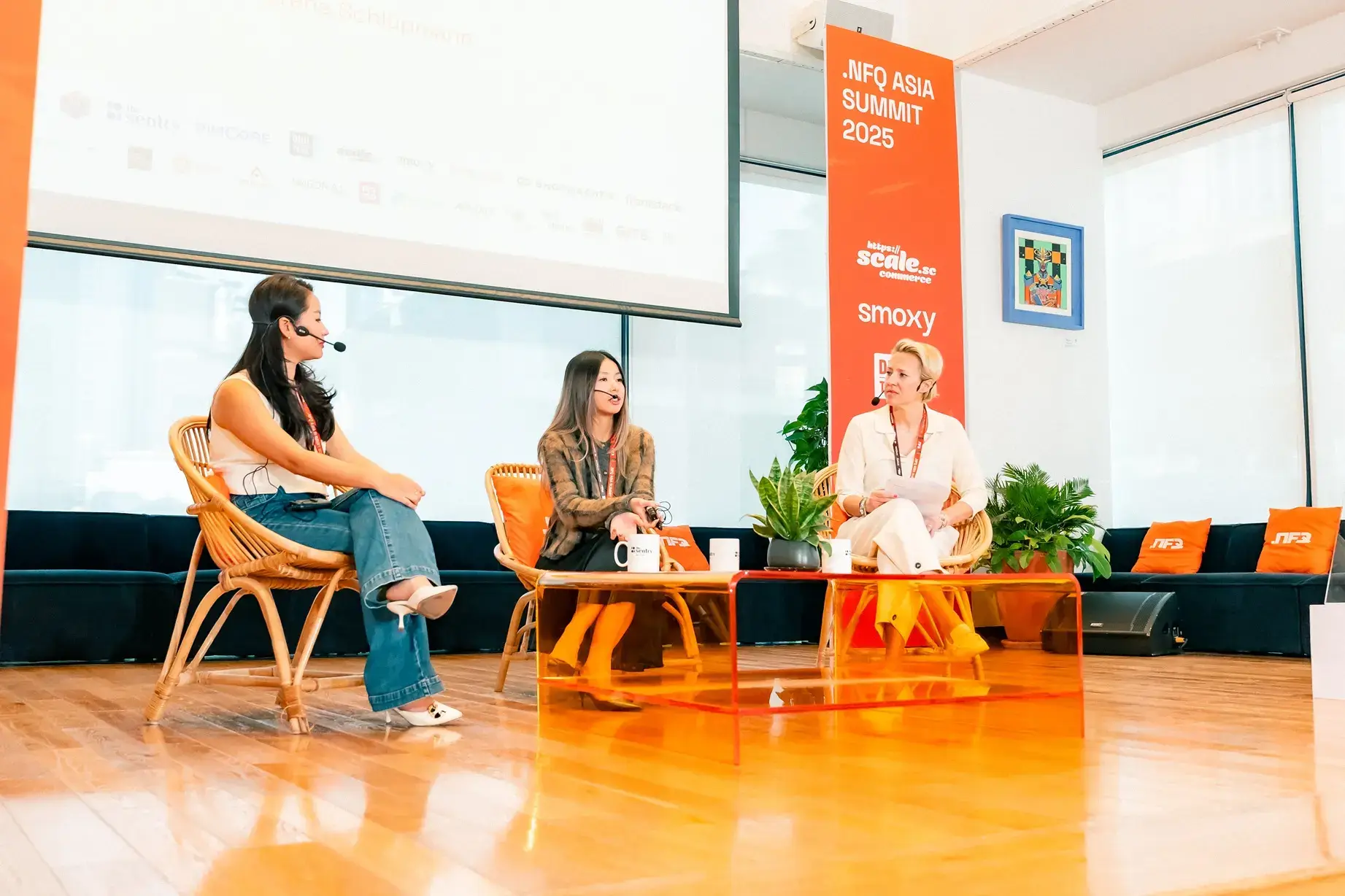
Wir haben im Zuge des .NFQ Asia Summit zwei inspirierende Frauen um Einblicke in ihre Erfahrungen, Herausforderungen und Erfolge gebeten: Chloe Hoang, CEO von ASP Group, die globale Marken mit Autoersatzteilen erfolgreich und vor allem digital in Vietnam etabliert, und Elaine Le, Regional Lead von Unios, die das Bewusstsein für nachhaltige Lichtdesigns von Australien über Südkorea bis Vietnam schärft. Ihre Geschichten zeigen, wie weibliche Führungskräfte in Vietnam Innovationen vorantreiben, den digitalen Handel etablieren und wenn nötig auch Barrieren durchbrechen.
Chloe Hoang (Owner & CEO der ASP Group)
Die Automobilbranche ist auch in Vietnam hart umkämpft – und nach wie vor stark männlich geprägt. Doch Chloe Hoang, CEO und Gründerin der ASP Group, hat bewiesen, dass weibliche Führungskräfte in diesem Sektor nicht nur bestehen, sondern sich an der Pole Position behaupten können. Sie hat es geschafft, weltweit bekannte Brands wie Liqui Moly und Aisin erfolgreich auf dem vietnamesischen Markt zu etablieren. Ihr Erfolgsgeheimnis? Marktorientierte Anpassungen, klare Kommunikation und eine Strategie, die regionale Unterschiede berücksichtigt:
What challenges have you faced in introducing global brands like Liqui Moly and Aisin to the Vietnamese market?
Bringing Liqui Moly & Aisin to Vietnam wasn’t just about importing products—it was about making them work for the market. The biggest challenge? Expectation vs. Reality.
- Feature Localization: Vietnamese consumers don’t want complexity—they want practicality. We introduced features gradually.
- Clear Communication: No tech jargon—just simple, relatable language (aka "lúa - rice- hoá").
- Regional Consumer Behavior:
- North: Slow to adopt but fiercely loyal (relationship-building is key).
- South: Quick adopters but brand-fluid (benefits drive decisions).
- How We Nailed It: We tailored strategies to fit each region, making the brands stick in the right way.
How do you ensure that ASP Group’s product offerings remain relevant and competitive amidst changing consumer preferences in the automotive sector?
ASP stays ahead by being agile, data-driven, and customer-focused:
- Market Adaptation:
- Durability, ease of use, affordability over fancy features.
- Trust-building up North, fast-track adoption down South.
- Straightforward messaging (because clarity wins).
- Data-Driven Decisions:
- Real-time consumer insights = smart product positioning.
- Strong industry ties = insider knowledge on trends.
- Custom product development for Vietnam’s real conditions.
- Building an Ecosystem of Trust:
Education, training & solid distribution networks keep ASP top-of-mind.
As a leader in a male-dominated industry, how do you advocate for gender diversity within ASP Group and the automotive sector as a whole?
Let’s be real—the auto industry isn’t exactly known for its female leaders. But that’s an advantage, not a setback.
- Strength Over Barriers: Women understand simplicity & reliability, shaping better products.
- Actions Speak Louder: We don’t argue for inclusion—we deliver impact that proves why we belong.
Empower & Mentor: Women shouldn’t compete to be “like men”—we own our strengths and lift each other up.
What advice would you give to young women who aspire to break into industries that are not traditionally welcoming to female leaders?
- Find Your Why: Passion beats obstacles, every time.
- Work Your Strengths: Whether bold or cautious, own it.
- Forget the Noise: Bias exists, but results shut it down.
Build Your Squad: Mentors, allies, and fellow trailblazers make the journey easier.
What role does mentorship play in your leadership journey?
- It’s Lonely at the Top (Unless You Have a Mentor).
- Growth is Contagious: A company thrives as much as its leader evolves.
- Raw & Real Sharing: No sugarcoating—just lessons, failures, and comebacks.
A Cycle of Support: Mentorship isn’t about giving advice—it’s about creating a space where women feel unstoppable.
What steps have you taken to build trust with international partners while maintaining ASP Group’s local identity in Vietnam?
- Integrity First: Say what you mean, mean what you say, and deliver on it.
- Transparency is Key: Cultural gaps exist—so we over-communicate and align expectations.
- Staying True to Vietnam: We balance global standards with local values, making ASP a trusted name internationally.
- The Long Game: Trust is built over time, through open communication and consistent performance.
At the end of the day, it’s not about blending in—it’s about standing out in the right way. That’s how ASP thrives, how we grow as leaders, and how we make real change happen.
Elaine Le (Regional Lead von Unios)
Elaine Le ist eine treibende Kraft hinter der internationalen Präsenz von Unios, einem australischen Unternehmen, das sich auf hochwertiges und nachhaltiges Lichtdesign spezialisiert hat. Als Regional Lead für Vietnam verfolgt sie eine klare Vision: Beleuchtung nicht nur als technisches Produkt, sondern als entscheidenden Faktor für Design, Nachhaltigkeit und Wohlbefinden zu positionieren. Im Interview teilt Elaine spannende Einblicke in die Strategie von Unios, spricht über die Herausforderungen internationaler Expansion und erklärt, wo die Zukunft der Beleuchtung liegen könnte:
What strategies have you used to build a strong brand identity for Unios in international markets?
For me, building a strong brand is all about passion and setting clear goals—knowing where you want to go and staying committed to that vision, even if the approach needs to change along the way. My goal has always been more than just selling lighting products; it’s about educating the market on the value of lighting and positioning Unios as a thought leader in the industry.
Understanding the landscape is crucial. We take different approaches depending on the market:
- In Australia, where Unios was born, we focused on innovation and high-quality standards, leveraging strong relationships with designers and specifiers.
- In Vietnam, we had to take a different path—less about aggressive marketing and more about building trust through personal, genuine connections. We planted the seed by making our presence known, ensuring people knew they had options beyond traditional brands.
A strong brand is also built from within. That’s why we invest heavily in local talents, cultural diversity, and competitive challenges—not just in products and profits, but in people. Talent development and training are at the heart of what we do because a brand is only as strong as the people who represent it.
In your opinion, how can lighting design contribute to promoting sustainability and environmental consciousness in architecture?
Lighting design plays a crucial role in shaping a more sustainable future, and our industry has a responsibility to be mindful of its impact. Some key areas where we can make a difference include:
- Using durable materials and designs that minimize waste, ensuring products have a long lifespan instead of contributing to fast-consumption cycles.
- Reducing light pollution and protecting the night sky, something I’ve personally been more aware of living in a rapidly growing city like Ho Chi Minh. Thoughtful lighting placement and smart controls can help balance functionality and environmental consciousness.
Ultimately, sustainable lighting isn’t just about efficiency—it’s about thoughtful design that integrates with the environment rather than overpowering it.
What has been the most rewarding aspect of leading a team in a highly technical industry?
Leadership in a highly technical industry comes with challenges, but what I find most rewarding is creating a culture where team members grow into their own expertise while also looking after each other.
I believe in fostering an open-dialogue, honest, and vulnerable environment, where people feel safe to share ideas, challenge each other, and improve together. My ultimate goal as a leader? That no one looks to me to solve their problems—instead, they only come to me for new ideas. When I see the team operating independently and confidently, I know I’ve done my job right.
What strategies have you found most effective in breaking stereotypes about women in technical or design-driven industries?
For me, breaking stereotypes isn’t about fighting external perceptions—it starts with a state of mind. It’s not about them, it’s about you. Confidence is key, even if you have to “fake it until you make it.”
I’ve always focused on emphasizing expertise and performance over reinforcing gender biases. When people see capability, results, and leadership, those things speak louder than any outdated stereotype. The more women show up, lead, and excel in technical industries, the less we’ll even need to have these conversations in the future.
If you could predict one major trend that will define the future of the lighting industry in the next decade, what would it be and why?
I wouldn’t claim to predict the future of the entire industry, but I can speak to what we’re seeing in Vietnam based on real trends. Historically, most of our projects were in early-stage development sectors like hospitality and residential. But recently, we’ve seen a shift towards education, healthcare, and sports & recreation.
This tells me that the market is evolving—lighting is no longer just about functionality, but an integral part of creating experiences and enhancing well-being. It shows we’re moving one step closer to our larger goal: changing how people perceive the importance of lighting.
If I had to predict one major shift, it would be that lighting will play an even bigger role in human-centric design—not just in how spaces look, but in how they make people feel, perform, and interact with their environment.